

Table of Contents
- Best Faux Plants That Look Real: Quick Comparison
- How We Evaluated the Most Realistic Artificial Plants
- Best Faux Plants by Category: Greenery, Flowers, and Succulents
- Most Realistic Artificial Plants: Materials and Texture That Matter
- Best Artificial Trees for Home: Statement Plants and Tall Arrangements
- How to Make Fake Plants Look Real: Styling and Placement Strategies
- How to Clean Artificial Plants: Maintenance for Long-Term Beauty
- Pet-Safe and Non-Toxic Faux Plants for Family Homes
- Frequently Asked Questions
Last Updated: October 5, 2026
Best Faux Plants That Look Real: Quick Comparison
Finding faux plants that look real comes down to material quality, botanical detail, and design that mimics how living plants grow.
At Spotteddonkey, we specialize in high-end artificial plants engineered to bring natural elegance home without live greenery's maintenance demands.
The best faux plants that look real share three qualities: soft-touch materials, realistic leaf veining and color gradients, and thoughtful arrangement in quality vessels. Whether decorating a low-light apartment, furnishing a rental, or creating a pet-safe sanctuary, they deliver lasting beauty without watering, pruning, or sunlight.
Below, our top picks by category, with honest assessments of what makes each work for different spaces.
| Category | Best Pick | Price | Key Advantage |
|---|---|---|---|
| Potted Greenery | Faux Snake Plant, 30 in | $149.99 | Bold architectural shape, zero maintenance |
| Floral Arrangements | Peony Stems in Taupe Vase | $115.99 | Soft-touch petals, realistic buds |
| Compact Succulents | Echeveria in Mini Pot | $15.43 | Perfect for desks and shelves |
| Statement Arrangements | Succulent Dough Bowl | $275.00 | Abundant display, preserved moss |
| Eucalyptus Accent | Spiral Eucalyptus, 22 in | $45.99 | Modern aesthetic, handcrafted vase |
How We Evaluated the Most Realistic Artificial Plants
Realism isn't subjective, it's measurable. We assess artificial plants across five dimensions.

Material Quality determines how plants feel and age. High-quality faux plants use soft-touch polyester, moisture-infused coatings, and flexible wire stems.
Botanical Accuracy means structure matches reality: natural leaf size variation, organic branching, and realistic bud progression. Uniform artificial flowers signal "fake" immediately.
Color Variation separates premium from budget pieces. Real plants have gradients within leaves, lighter veins, darker edges, and subtle blush tones.
Vase and Vessel Design anchors the piece.
Arrangement and Styling matters more than most realize. Stem positioning, open versus budded blooms, and filler foliage determine whether a piece looks carefully arranged or generic.
Best Faux Plants by Category: Greenery, Flowers, and Succulents
Potted Greenery and Foliage Plants
The Faux Snake Plant, 30 inches makes a bold statement in any room. At $149.99, this architectural piece delivers a living plant's height and impact without sunlight or watering, critical for renters, travelers, and low-light spaces.
Its structural realism convinces: tall vertical leaves capture the plant's natural geometry, and detailed coloring avoids the flat green of cheaper options. It works on a living room floor, beside an entryway console, or in a dim office corner.
At 30 inches, it demands floor or side-table placement; for shelving, look to the succulent options below.
The Artificial Boston Fern in Black Ribbed Stoneware Vase at $88.57 offers a softer aesthetic.

The ribbed stoneware vase is bold and modern, while the fern's lifelike fronds balance the geometric vessel.
Faux Flowers and Floral Arrangements
Realistic artificial flowers demand premium materials. The Peony Stems in Taupe Pebble Vase at $115.99 delivers: soft-touch polyester petals with a moisture-infused coating, subtle blush detailing, and realistic buds at various bloom stages.
What separates it from cheaper peony arrangements is botanical progression: tight buds alongside open flowers, exactly how fresh peonies age in a vase.
The handcrafted taupe ceramic vase has a matte pebble texture, grounding the romantic flowers in a modern, minimalist aesthetic.
The Artificial Freesia Stems in Taupe Ceramic Vase at $77.99 offers a lighter alternative.
The included hydrangea sprays add volume and greenery, creating a fuller, more natural composition than a single-stem arrangement.
The Artificial White Orchid in Vanda-Style Pot at $49.99 is the budget-friendly floral option without sacrificing realism.
Orchids intimidate many plant owners because they're finicky about watering and humidity. This faux version gives you the refined aesthetic without the learning curve.
Succulents and Compact Tabletop Plants
The Artificial Echeveria in Mini Ceramic Pot at $15.43 is the entry point to realistic faux plants.
For the price, it delivers surprising detail: fleshy leaves with realistic color gradients and a botanically accurate compact rosette form. Many people buy several to create a succulent garden across shelves.
The Agave Plant with 19 Leaves in Cement Cachepot at $27.95 offers more presence.
Agaves' appeal comes from structured, geometric leaf arrangement rather than delicate detail; this faux version captures that bold form, and the finished white rocks complete the desert aesthetic.
The Artificial Succulent Arrangement in Handmade Barnwood Dough Bowl at $275.00 is the premium option for a complete, abundant display: multiple lifelike succulents in an 18 x 7 x 10-inch handmade barnwood dough bowl with real preserved moss.

The preserved moss is the differentiator, creating the illusion of a living succulent garden with depth single-pot arrangements can't match. It works as a dining table centerpiece, console statement, or shelf focal point.
Most Realistic Artificial Plants: Materials and Texture That Matter
The difference between convincing artificial plants and obvious fakes comes down to material engineering. Realistic faux plants that look real use construction techniques budget options skip.
Soft-touch polyester is the gold standard for realistic petals and leaves, feeling like fabric or fresh foliage rather than plastic.
Moisture-infused coatings mimic the waxy, dewy quality of fresh flowers and help material age gracefully, resisting the brittleness and dulling of untreated plastic.
Vein-printed leaves are a detail most people don't consciously notice but immediately sense.
Artificial Boston Fern Arrangement in Black Ribbed Stoneware Vase →
Flexible wire stems allow natural shaping.
Color variation within individual leaves separates premium from budget pieces.
Research on consumer perception of artificial materials shows that texture and tactile qualities influence how realistic people perceive products.
Best Artificial Trees for Home: Statement Plants and Tall Arrangements
Tall faux plants and trees fill vertical space, anchor large rooms, and create impact smaller arrangements can't. The challenge is finding options that look realistic at scale.
The Faux Snake Plant at 30 inches is a statement piece for modern interiors.
For softer, more naturalistic height, the Artificial Boston Fern provides feathery texture without the snake plant's rigid structure, working in transitional, farmhouse, and eclectic décor where it softens hard architectural lines.
Both work in entryways, beside sideboards, or in corners where live plants would struggle with light. The maintenance-free aspect is crucial for tall pieces, since you can't easily water a 30-inch plant in a corner without moving it regularly.
How to Make Fake Plants Look Real: Styling and Placement Strategies
The most realistic artificial plants fail if styled like decorations rather than living elements. Strategic placement, thoughtful grouping, and intentional arrangement make faux plants genuinely convincing.
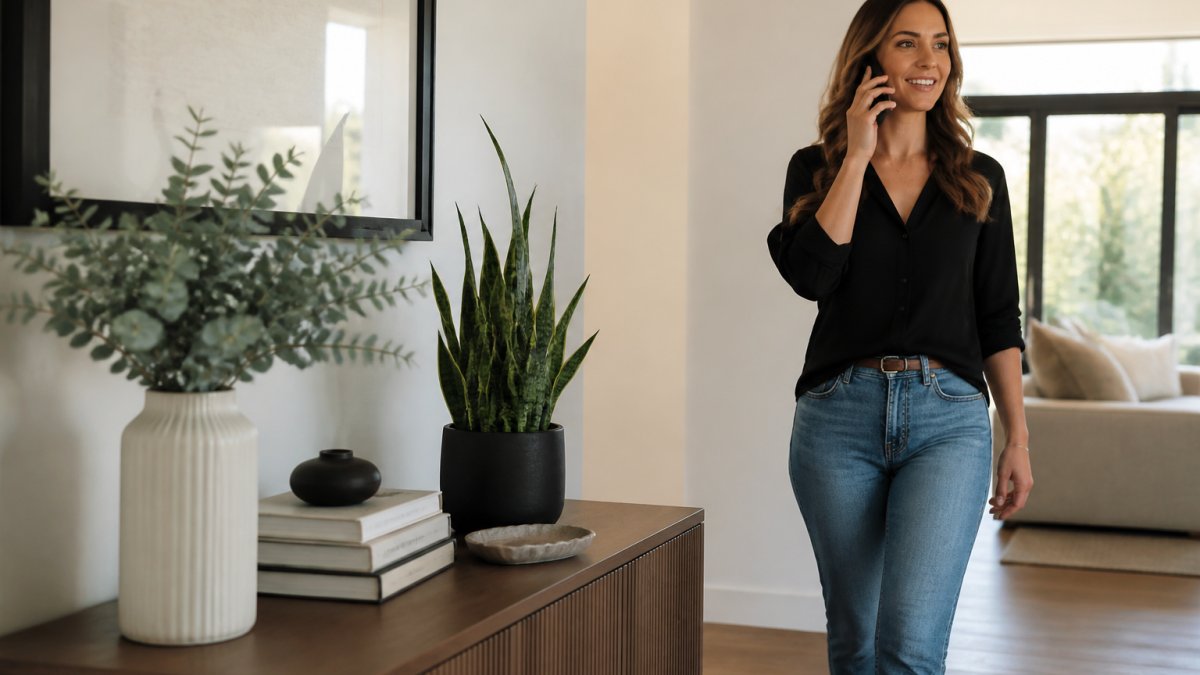
Group by Odd Numbers creates visual interest single plants can't. Three succulents at varying heights feel intentional; five potted arrangements on a console feel curated.
Vary Heights and Sizes so the eye travels naturally.
Layer with Other Objects for context.
Choose Placement Based on Light even though artificial plants don't need it.
Avoid Perfection in arrangement. Real plants have asymmetrical growth, slightly drooping stems, and natural imperfections; perfectly symmetrical, rigid arrangements look staged.
Rotate Displays Seasonally by swapping arrangements. Changing your faux plants with the seasons signals you're actively engaging with your décor, not leaving a static display up year-round.
How to Clean Artificial Plants: Maintenance for Long-Term Beauty
The most realistic faux plants that look real will fade or collect dust without basic care.
Dust regularly with a soft microfiber cloth or feather duster.
Use compressed air for delicate arrangements with small blooms.
Avoid harsh chemicals or abrasive scrubbing. Moisture-infused coatings and soft-touch polyester can be damaged by strong cleaners; a barely damp microfiber cloth removes dust without residue.
Protect from direct sunlight over time. Even premium artificial plants can fade in direct sun for years, though live plants fade too.
Check vases and pots for water rings or dust buildup.
Most artificial plants require only these basic steps, with no repotting, fertilizer, or seasonal pruning. The low-maintenance promise is real: you're preventing dust accumulation, not managing plant health.
Pet-Safe and Non-Toxic Faux Plants for Family Homes
Pet owners and parents need certainty that decorative plants are safe. Live plants pose real toxicity risks, lilies, sago palms, and many common houseplants are poisonous to cats and dogs; artificial plants eliminate this concern (Toxic and Non-Toxic Plants).
However, not all artificial plants are equal on materials safety. Budget options sometimes use dyes or materials that aren't pet-safe; premium faux plants like those from Spotteddonkey are crafted from non-toxic materials designed for homes with companions.
The Peony Stems in Taupe Vase and Freesia Stems in Taupe Vase both use non-toxic materials, safe even if a curious pet or child investigates.
The Faux Snake Plant and Echeveria Succulent are equally pet-safe, perfect for households where live plants create anxiety about accidental poisoning.
Beyond material safety, consider placement. Even non-toxic artificial plants can be choking hazards if small pieces break off, so keep delicate arrangements on high shelves or stable surfaces. Sturdy potted pieces like the snake plant are safer for active households.
The best faux plants that look real deliver lasting beauty without the demands of traditional plant care. Whether you're furnishing a rental, creating a pet-safe sanctuary, or simply tired of keeping live plants alive, realistic artificial plants from Spotteddonkey bring natural elegance and peace to your space. Interior design trends emphasizing low-maintenance décor confirm that artificial plants have evolved from obviously fake to genuinely sophisticated design elements.
Frequently Asked Questions
How can you tell if a faux plant looks realistic?
The most realistic artificial plants feature texture variation in leaves, natural color gradients, and flexible stems that allow shaping. Look for moisture-infused coatings that mimic fresh foliage, vein-printed details, and realistic buds or blooms at different stages. High-quality faux plants use soft-touch materials like polyester with a velvety feel rather than glossy plastic. Examine close-up photos from actual customer homes before purchasing to assess realism in natural lighting.
What makes the most realistic artificial plants different from cheaper options?
Premium faux plants invest in material quality, hand-assembled construction, and artisan-crafted vases or pots. Realistic options feature moisture-infused coatings for a soft, fresh-cut feel, flexible wire stems for natural shaping, and layered foliage with color variation. Cheaper alternatives often use rigid stems, uniform coloring, and glossy finishes that read as plastic. Handcrafted ceramic vases and preserved moss accents also elevate the overall appearance, making the entire arrangement feel intentional and curated rather than artificial.
Are faux plants safe for homes with pets and children?
Yes, quality faux plants are crafted from non-toxic materials safe for cats, dogs, and children. Spotteddonkey specializes in pet-friendly artificial plants and floral arrangements made from materials that pose no toxicity risk if accidentally ingested. Always verify that your chosen faux plant is labeled non-toxic before purchase, especially if you have curious pets or young children. Unlike live plants such as lilies or sago palms, realistic artificial plants eliminate the worry of poisoning while maintaining beautiful greenery in your home.
How do you prevent faux plants from looking dusty and faded over time?
Regular light cleaning with a soft cloth or duster keeps artificial plants looking fresh and vibrant. For delicate blooms and foliage, use a soft brush or compressed air to remove dust without damaging petals or leaves. Every few months, gently wipe leaves with a slightly damp microfiber cloth to restore shine and color. Avoid direct sunlight in windows, which can fade the materials over time. Quality faux plants made from UV-resistant materials and high-grade polyester hold color better and require minimal maintenance to stay beautiful for years.
What size faux plant should I choose for my space?
Match faux plant size to your room and furniture scale. Tall statement plants like a 30-inch snake plant work well in corners, entryways, or next to sideboards to add vertical interest. Smaller arrangements (6-8 inches) suit shelves, desks, and nightstands. For centerpieces and console tables, 13-15 inch vases with stems create balanced focal points. Consider the pot size as well, larger handcrafted vases anchor bigger rooms, while compact ceramic pots suit apartments and smaller spaces. Measure your placement area and view photos of similar-sized arrangements in comparable rooms before deciding.