

Table of Contents
- Why Non-Toxic Faux Plants Matter for Cat Owners
- Quick Comparison: Top Cat-Safe Artificial Plants
- Cat-Safe Artificial Plants That Look Genuinely Realistic
- Non-Toxic Artificial Plants: Materials and Safety Standards
- How to Keep Cats Away from Plants: Placement and Behavior
- What to Look for When Choosing Faux Plants for Cats
- Maintenance and Durability: Why Faux Plants Outlast Live Ones
- Frequently Asked Questions
Last Updated: October 11, 2026
Why Non-Toxic Faux Plants Matter for Cat Owners
Cat owners face a genuine dilemma: you want beautiful greenery in your home, but live plants pose real risks. Many common houseplants are toxic to cats, and even non-toxic varieties can cause problems if your pet knocks them over or ingests soil. The best non toxic faux plants for cats solve this problem entirely.
Spotteddonkey's premium faux plants deliver aesthetic beauty without safety concerns. Unlike plastic-looking alternatives, they look so genuine that guests won't realize they're artificial until they touch them.
Artificial plants require zero maintenance, never fade in low light, and survive harsh climates without wilting, ideal for busy professionals, frequent travelers, and renters.
Quick Comparison: Top Cat-Safe Artificial Plants
| Product | Price | Best For | Key Feature |
|---|---|---|---|
| Artificial Succulent Arrangement in White Ceramic Pot, 12 Inch | $119.99 | Statement pieces and large spaces | Lifelike texture variety |
| Artificial Real Touch Freesia Stems in Tall Taupe Vase | $77.99 | Elegant entryways and shelves | Bendable stems for custom shaping |
| Sansevieria Plant in Chevron Pattern Pot | $29.99 | Modern minimalist decor | Handcrafted stoneware vessel |
| Artificial Echeveria Succulent in Mini Ceramic Pot | $15.43 | Desks and small shelves | Hand-assembled, compact design |
| Agave Plant with Diamond Embossed Pot | $27.95 | Living room focal points | 11-inch height with realistic leaves |
Cat-Safe Artificial Plants That Look Genuinely Realistic
Today's best non toxic faux plants for cats use soft-touch materials that mimic leaf texture, realistic color gradations, and bendable stems. Your cat won't be tempted to chew something that looks and feels completely artificial.
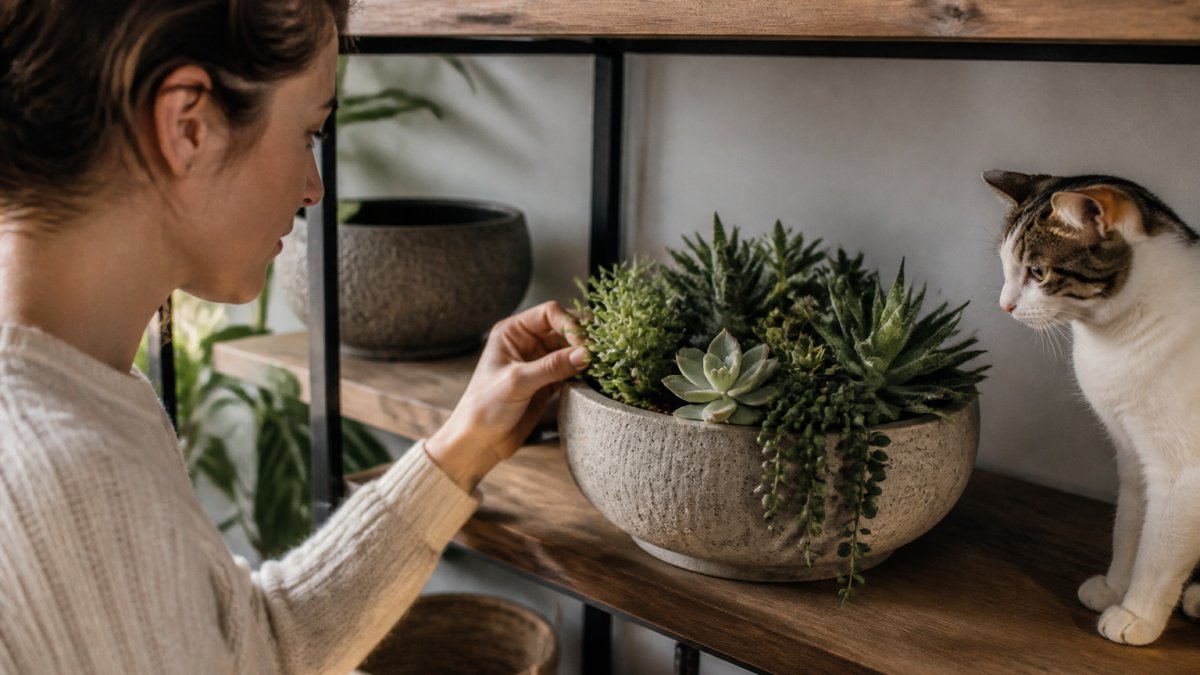
Compact Succulents for Shelves and Desks
Succulents are the safest choice for cat homes because they're naturally compact and stable. If your cat knocks one over, the lightweight pot and flexible leaves mean minimal risk of injury.
The Artificial Echeveria Succulent in Mini Ceramic Pot at $15.43 is an ideal starter piece. This 6-inch arrangement fits perfectly on office desks, nightstands, or bathroom shelves, with hand-assembled soft-touch leaves and minimal risk if knocked over.

For a slightly larger option, the Artificial Echeveria in Handcrafted Mini Cement Pot ($19.99) offers the same safety benefits with a handcrafted cement vessel that adds modern charm. The dark green leaves rimmed with red look remarkably lifelike, and the included river rocks complete the natural appearance.

Statement Greenery for Living Spaces
Larger faux plants create focal points in living rooms and entryways. Choose arrangements that are stable enough to withstand a playful cat's curiosity while complementing your decor.
The Artificial Succulent Arrangement in White Ceramic Round Pot, 12 Inch at $119.99 is a beautiful choice for statement pieces. This 12-inch faux succulent arrangement is potted in a clean white ceramic round pot, offering a modern, maintenance-free alternative to live succulents. The lifelike design captures the texture and color variety of real succulents, making it a versatile accent for tabletops, shelves, entryways, and covered outdoor areas.
The Artificial Real Touch Freesia Stems in Tall Taupe Ceramic Vase ($77.99) brings soft coral blooms and green hydrangea to shelves and mantels. The soft-touch material and bendable stems offer lasting beauty.

Flowering Arrangements for Elegant Decor
Artificial flowers never wilt, drop petals, or require deadheading. The Freesia arrangement includes both flowers and realistic green hydrangea, giving a mixed-texture display that looks professionally arranged.
Non-Toxic Artificial Plants: Materials and Safety Standards
When evaluating artificial plants for cat safety, "non-toxic" refers to two concerns: chemical toxicity from dyes and coatings, and physical hazards from ingestion or choking.
Chemical Safety: Materials and Coatings
Premium faux plants use high-quality materials. However, the dyes and adhesives used can vary in safety.
Handcrafted ceramic, stoneware, and cement pots are durable and stylish.
Physical Hazards: Choking and Ingestion Risks
Even non-toxic materials pose a risk if swallowed. A faux leaf or stem fragment can pose a physical hazard. Material durability and construction quality matter.
Inspect artificial plants before purchase for:
- Loose leaves or petals: Gently tug on flowers and foliage. Leaves should not pull free easily. If they do, your cat could ingest them during play.
- Thin, brittle stems: Stems that snap or splinter into sharp pieces are more dangerous than flexible, bendable ones. Soft-touch polysilk stems are safer than rigid plastic.
- Small decorative elements: River rocks, moss, or faux soil used to fill pots can be choking hazards. Ensure these are glued in place or absent entirely.
- Seams and joints: Where stems meet the pot or where leaves are glued to branches, weak seams can separate. Run your finger along joints to check for gaps or loose adhesive.
- Sharp pot edges: Ceramic and stoneware pots should have smooth, rounded rims. Avoid pots with rough glaze or unfinished edges that could cut a cat's mouth.
The Artificial Echeveria Succulent in Mini Ceramic Pot has hand-assembled leaves and a tactile glaze finish. The Artificial Succulent Arrangement in White Ceramic Round Pot, 12 Inch is potted in a clean white ceramic round pot.
When to Contact a Veterinarian
If your cat ingests a piece of artificial plant material, monitor for signs of gastrointestinal distress: vomiting, loss of appetite, lethargy, or constipation. These symptoms can appear within hours or days. Contact your veterinarian immediately if you observe any of these signs, especially if your cat ingested a large piece or multiple fragments. Blockages may require imaging (X-ray or ultrasound) or, in severe cases, surgical removal.
How to Keep Cats Away from Plants: Placement and Behavior
Placement strategy must account for your cat's individual behavior and climbing ability. Understanding your cat's habits is the first step in choosing both the right plant and the right location.
Assessing Your Cat's Risk Profile
Cats interact with plants based on age, energy level, and prey drive. Kittens and young cats are more likely to bat at dangling leaves and test objects with their mouths. Senior cats typically ignore plants unless at eye level. High-prey-drive cats may fixate on realistic foliage.
Before placing a faux plant, ask yourself:
Artificial Real Touch Freesia Stems in Tall Taupe Ceramic Vase 13.5-inches →
- Does your cat climb? If yes, no shelf is truly "out of reach." Many cats can jump 6 feet or higher. A plant on a bookshelf at eye level is accessible to most adult cats.
- Does your cat bat at objects? Cats that swat at hanging toys or curtains will test a trailing faux plant. Dangling stems are inherently tempting.
- Does your cat chew? Some cats mouth or chew non-food objects, especially if stressed or bored. These cats require extra scrutiny of plant durability.
- Is your cat food-motivated? Cats that steal food from counters or tables are more likely to investigate anything new in their environment.
Placement Strategies by Cat Behavior Type
For climbing cats: Place faux plants on the floor in corners or on low, stable furniture. A low-profile succulent arrangement on a weighted ceramic pot is safer than a tall, narrow vase.
For batting and swatting cats: Avoid trailing arrangements. The Artificial Succulent Arrangement in White Ceramic Round Pot, 12 Inch is a compact option. Position flowering arrangements on high shelves (5+ feet) or use wall-mounted planters.
For chewing cats: Choose arrangements with sturdy, thick stems and leaves that don't easily detach. The Artificial Echeveria in Handcrafted Mini Cement Pot is a sturdy option.
For curious but non-destructive cats: Standard placement on shelves, tables, or plant stands works well. These cats will investigate but won't aggressively chew or knock things over. Focus on stability, a weighted pot with a low center of gravity is your primary defense.
Securing Plants to Prevent Knockovers
For high-value pieces or cats with a history of knocking things over, use museum putty or removable adhesive strips to secure the pot to the surface.
For wall-mounted arrangements, use heavy-duty picture hooks rated for at least twice the weight of the arrangement.
Hanging arrangements suspended from ceiling hooks or high wall mounts are the safest option for cats that climb or bat. A trailing faux plant hung from a hook 7+ feet high is completely out of reach and provides visual interest without risk.
Environmental Enrichment as a Deterrent
Cats investigate plants partly out of boredom. Providing adequate environmental enrichment, climbing trees, window perches, interactive toys, and regular play sessions, reduces the likelihood that your cat will fixate on a faux plant.
What to Look for When Choosing Faux Plants for Cats
When shopping for the best non toxic faux plants for cats, evaluate these factors: material quality, pot stability, size, and style fit.
When shopping for the best non toxic faux plants for cats, prioritize soft-touch leaves and stems, pot stability (heavier ceramic, stoneware, and cement are safer), and size appropriate to your cat's behavior. Compact succulents are ideal for curious cats because they're harder to knock over. Choose styles you'll actually display and enjoy.
Maintenance and Durability: Why Faux Plants Outlast Live Ones
This is where artificial plants shine. A live plant requires watering schedules, humidity monitoring, pest management, and seasonal adjustments (Set houseplants up for success: right plant, right place). A faux plant requires occasional dusting and nothing else.
A faux plant from Spotteddonkey offers lasting beauty that never fades or wilts. The arrangement won't outgrow its pot or need repotting. For busy professionals, frequent travelers, and anyone with a history of killing houseplants, this reliability is invaluable.
Cleaning is straightforward. A soft cloth or gentle brush removes dust. For stubborn dust, a slightly damp cloth works, but avoid soaking the arrangement or using harsh chemicals. The soft-touch materials are durable but deserve gentle care to maintain their appearance.
Durability also means your faux plant investment offers lasting beauty. You'll never replace it due to disease, pests, or seasonal decline.
Frequently Asked Questions
Are faux plants safe for cats?
Yes, high-quality non-toxic faux plants are safe for cats. The key is choosing products made from pet-safe materials like polysilk, silk, and non-toxic dyes. Spotteddonkey's artificial plants are crafted from non-toxic materials, perfect for pet-friendly homes. However, always check that loose parts like small stones or decorative elements are secure, as these can pose choking hazards.
What materials should I look for in cat-safe artificial plants?
Look for non-toxic artificial plants made from polysilk, silk, or high-quality plastic with non-toxic dyes and coatings. Avoid products with toxic adhesives, heavy metals, or loose decorative elements. Spotteddonkey's arrangements feature realistic materials crafted from non-toxic materials, making them ideal for homes with curious cats.
How do I keep my cat from chewing faux plants?
Place artificial plants on high shelves, windowsills, or enclosed spaces where cats cannot easily reach them. Use cat deterrent sprays around the base of arrangements, provide alternative chewing toys filled with catnip, and consider placing plants in rooms where your cat spends less time. If your cat shows persistent interest, redirect their attention to approved toys and provide enrichment activities.
Can artificial plants be toxic to cats?
Low-quality artificial plants may contain toxic dyes, adhesives, or coatings that can harm cats. Premium non-toxic artificial plants, like those from Spotteddonkey, are crafted from non-toxic materials safe for pets. Always verify that products are labeled non-toxic and avoid anything with strong chemical smells or loose components that could be swallowed.
What are the best artificial plants for a home with cats?
The best non-toxic faux plants for cats are compact, low-maintenance options like succulents and small foliage arrangements that can be placed safely out of reach. Spotteddonkey offers cat-safe options including artificial succulents in handcrafted cement pots ($15.43-$64.99), the Sansevieria plant ($29.99), and the Agave plant ($27.95), all non-toxic and designed for pet-friendly homes.
Creating a beautiful, cat-safe home doesn't mean sacrificing greenery or style. The best non toxic faux plants for cats deliver the aesthetic you want without any of the worry. Spotteddonkey's collection of handcrafted, hyper-realistic arrangements combines safety, elegance, and durability in pieces designed specifically for pet-friendly homes. Browse our full catalog to find the perfect addition to your space, knowing your cat is completely safe.