

Table of Contents
- Why Faux Plants Need Regular Cleaning (And What Dust Does to Them)
- How to Remove Dust from Faux Plants: The Dry Cleaning Method
- How to Clean Faux Plants with Water: Safe Wet Cleaning Steps
- How to Clean Artificial Flowers and Delicate Petals
- How Often to Clean Artificial Plants: A Simple Schedule
- Cleaning Tall Plants, Trees, and Large Foliage Without Damage
- Cleaning Products to Avoid and Damage Prevention Tips
- Frequently Asked Questions
Last Updated: October 12, 2026
Why Faux Plants Need Regular Cleaning (And What Dust Does to Them)
Faux plants collect dust just like real ones, and knowing how to clean faux plants without damaging them protects the finish and realism you paid for.
Dust buildup dulls color first: a gray film settles on leaves and petals, and the silk texture looks flat, fast, in a dry climate.
- Dust blocks light and mutes color
- Buildup makes silk fibers feel stiff and rough
- Grease from cooking areas traps dust into a sticky film
The EPA's indoor air quality guidance notes that household dust carries particles that settle on every surface, including decor. Faux greenery is no exception.
Most guides say to just wipe everything down, but that tears silk petals, loosens glued stems, and rubs off painted finishes.
How to Remove Dust from Faux Plants: The Dry Cleaning Method
The dry method is your first choice for routine dusting, handling surface dust without moisture, what most faux plants need most of the time.
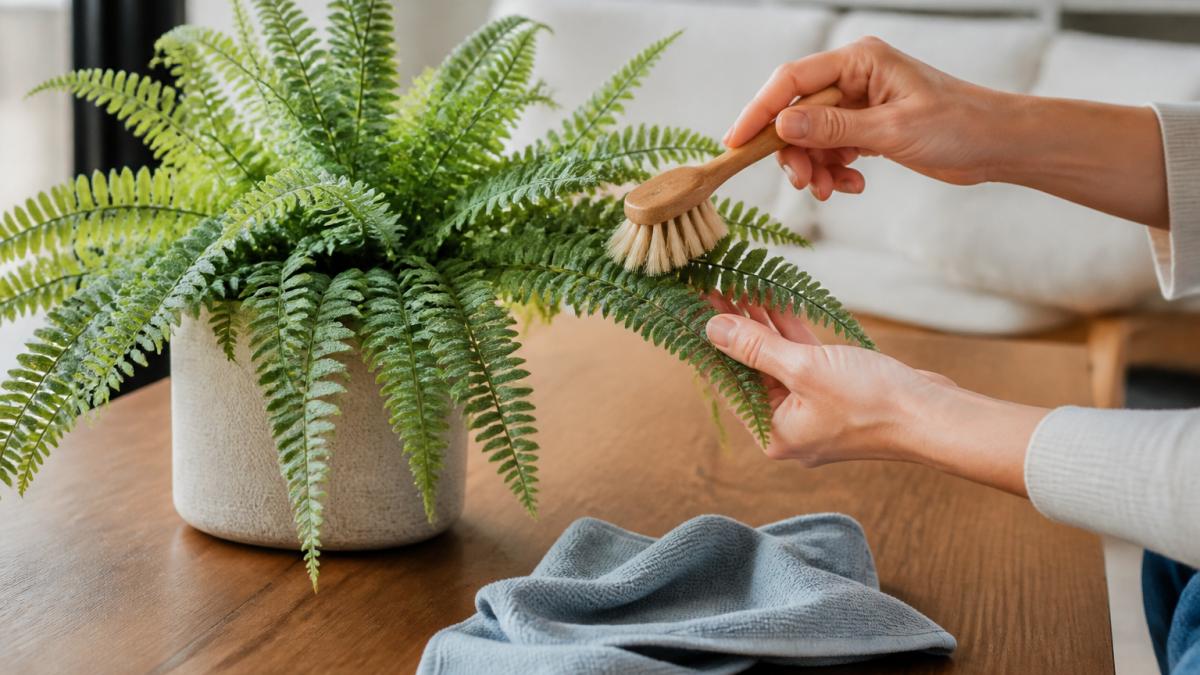
Start here every week or two.
Total Time: 5-10 minutes Difficulty: Beginner
What You'll Need
- Soft-bristle brush or clean paintbrush
- Blush brush for small petals
- Microfiber cloth
Soft-Bristle Brush and Paintbrush Technique
A soft-bristle brush removes dust without scratching; a clean paintbrush works well for narrow leaves and stems.
Hold each leaf gently and brush from the stem outward, letting dust fall away rather than pressing it in.
Work top to bottom, since dust from upper leaves lands on lower ones.
- Use light pressure only
- Brush in one direction
- Support the stem with your free hand
- Shake the brush outside when it loads up
A common mistake is scrubbing: silk and polysilk fibers fray under pressure, and frayed edges look fake up close.
Using a Microfiber Cloth or Damp Rag
A microfiber cloth picks up what the brush leaves behind, dry on broad leaves, barely damp for stubborn spots. Wring a damp rag until it feels almost dry; drips can stain fabric leaves or loosen glue at the stem joint. Wipe in the direction the leaf grows, flipping to a clean side as it collects dust.
How to Clean Faux Plants with Water: Safe Wet Cleaning Steps
Wet cleaning solves sticky buildup dry dusting cannot touch, but only some faux plants handle a rinse.
How to clean faux plants with water: use a gentle rinse for plastic and coated foliage, and a damp cloth only for silk, paper, and glued arrangements. Never soak a potted plant or submerge a glued stem.
When to Rinse and When to Wipe
Rinse only when the material allows it. Plastic and coated leaves handle a light shower. Silk, paper, and dried-look petals do not.
For a safe rinse, take stems outdoors or into a tub and use cool water at low pressure. Never use hot water, which warps plastic and fades dye.
- Rinse plastic and coated foliage outdoors
- Use a damp cloth for silk and delicate petals
- Skip the rinse for anything glued into a pot
- Let everything air dry fully before styling
For potted pieces, wipe the leaves instead of rinsing, water trapped in the pot can rust wire stems and soften the foam base. Our potted snake plant cleans best with a cloth, not a shower.

How to Clean Artificial Flowers and Delicate Petals
Artificial flowers need a lighter touch than foliage, and the right touch depends on the petal material. Silk, polyester fabric, and molded plastic each respond differently to water, heat, and pressure; cleaning them the same way is how petals crease, fray, or lose shape.
How to clean artificial flowers: identify the petal material first, then dust with a blush brush or a hairdryer on cool, and spot-clean only with a method that matches that material. Never pull on petals or press them flat.
Match the Method to the Petal Material
| Petal Material | Safe Dry Method | Safe Wet Method | Avoid |
|---|---|---|---|
| Silk | Blush brush, cool hairdryer | Barely damp cloth, light steam | Soaking, rubbing, hot water |
| Polyester fabric | Blush brush, cool hairdryer | Damp cloth with a drop of mild soap | Wringing, scrubbing |
| Coated or waxed fabric | Soft brush only | Dry cloth only | Water, steam, heat |
| Molded plastic | Soft brush, microfiber | Cool rinse or damp cloth | Hot water, solvents |
| Paper or dried-look | Soft brush only | Dry cloth only | Any moisture |
Silk petals are the most fragile: fibers lift and fray when rubbed, and water can leave rings once dry.
Polyester fabric petals tolerate more handling.
Artificial Succulent Arrangement in White Ceramic Round Pot, 12 Inch →
Coated and waxed petals are the trap: they look durable, but water clouds the coating and heat melts it.
Paper and dried-look petals cannot take moisture at all. Even a damp cloth can wrinkle the surface or bleed dye.
Step-by-Step for a Full Bloom
- Support the flower head with one hand before you touch a petal
- Brush from the center outward, following the natural curve
- Blow remaining dust away with a hairdryer on cool
- Spot-clean stains with a barely damp cloth corner, one petal at a time
Silk petals can be steamed lightly to release creases from storage or shipping. Hold the steamer well back, let the fabric relax on its own, and never touch a hot steamer plate to the petal.
What to Do If a Petal Is Damaged
Damage on artificial flowers is usually reversible if caught early.
What you cannot fix is dye bleed. Once color migrates into a neighboring petal, the stain is permanent. That is why the test spot matters more on flowers than on foliage.
For a full arrangement, clean the vase separately. Our Boston fern arrangement shows how a sculpted stoneware base holds up to a simple wipe, while the fronds need the brush.

How Often to Clean Artificial Plants: A Simple Schedule
How often you clean depends on where the plant sits, not the calendar, one near a vent collects dust faster than one on a shelf.
Use this schedule as your starting point.
| Location | Dry Dusting | Deep Clean |
|---|---|---|
| Living room shelf | Every 2 weeks | Every 3 months |
| Kitchen or dining area | Weekly | Every 6-8 weeks |
| Bedroom or office | Every 2-3 weeks | Every 3-4 months |
| Entryway or hallway | Weekly | Every 2 months |
| Covered patio | Weekly | Monthly |
Homes with pets, heavy foot traffic, or dusty, dry climates need the shorter end of each range.
Cleaning Tall Plants, Trees, and Large Foliage Without Damage
Tall pieces need a different approach because you cannot flip them over.
- Use a long-handled duster for upper branches
- Support each stem with one hand while brushing
- Clean leaves before the trunk or pot
- Vacuum the base with a brush attachment on low
For large foliage, a vacuum brush attachment saves time.
If a branch bends out of shape, reshape it by hand. Most wire-core stems hold a new position once you set it.
Our 12-inch succulent arrangement is small enough for a quick cloth wipe, while a floor-standing tree needs the top-down method.

Cleaning Products to Avoid and Damage Prevention Tips
Some cleaners ruin faux plants on contact. Knowing what to skip matters more than what to use, and why each fails helps you judge products not on any list.
Products to Avoid and Why They Damage Faux Foliage
| Product | What It Does | Why |
|---|---|---|
| Bleach and ammonia cleaners | Strips dye, yellows whites | Oxidizes pigments and breaks down fabric coatings |
| Furniture polish and oil sprays | Leaves an oily film that traps dust | Silicone and petroleum oils bond to the surface and never fully dry |
| Abrasive pads and scrub sponges | Scratches coatings, frays silk | Physical abrasion removes the protective finish |
| Hot water | Warps plastic, fades dye, softens glue | Heat above roughly 100°F distorts molded shapes and accelerates dye migration |
| Solvent-based sprays | Melts coatings, dulls sheen | Solvents dissolve the lacquer or wax layer that gives leaves their finish |
| Glass cleaner with ammonia | Clouds coated leaves | Ammonia attacks the same coating solvents do, just more slowly |
| Scented or dyed all-purpose sprays | Leaves residue, transfers color | Perfume oils and dyes settle into textured surfaces |
Furniture polish is the worst offender because it looks like it works: the leaf shines for a day, then the oil film grabs dust faster than the bare surface did. Only a mild soap wipe removes it.
Safe Alternatives That Actually Work
- Plain water on a microfiber cloth for routine dust
- A single drop of mild dish soap in a bowl of cool water for sticky residue
- Cool air from a hairdryer for loose dust on delicate petals
- A soft-bristle brush or clean paintbrush for textured leaves
A common pattern is reaching for the strongest cleaner first. Reverse that: start with the gentlest method that could work, and escalate only if the stain survives.
Test-Spot Protocol Before Any New Cleaner
- Pick a leaf or petal near the base of the plant, where a mark would not show.
- Apply the cleaner to a cloth, never directly to the plant.
- Wipe a small area and wait until it dries completely, not just until it looks dry.
- Check for color transfer on the cloth, cloudiness on the surface, and any change in texture.
- If any of those appear, stop and use a gentler method on the rest of the plant.
Color bleeding and coating damage often show up only after drying, which is why the wait matters.
Troubleshooting Common Damage
- Color bleeding: irreversible. Prevent it by testing first and never soaking dyed fabric.
- Fraying silk edges: trim with small sharp scissors along the petal line, then avoid brushing that petal.
- Bent wire stems: reshape by hand, bending slowly at the wire, not at the leaf joint. Most wire cores hold a new position once set.
- Loose leaves or petals: reattach with a small dot of clear craft glue applied with a toothpick. Support the piece until the glue sets.
Placement and Storage to Reduce Future Damage
- Keep plants out of direct sun to slow fading and coating breakdown
- Move pieces away from kitchen grease and candle smoke, which bond to leaves
- Store spare stems flat in a breathable box, not folded or compressed
- Keep plants away from heating vents, which accelerate dust settling
The American Cleaning Institute's surface care guidance recommends matching the cleaner to the surface, and faux foliage counts as a delicate surface. For pet-safe homes, stick to water and mild soap. Spotteddonkey crafts our plants from non-toxic materials, and gentle cleaning keeps them that way.
Frequently Asked Questions
Can you wash artificial plants with water?
Yes, some faux plants can be rinsed with gentle water. Hold the plant by the stem and use a light stream of cool water over a tub or outdoors. Avoid soaking the pot or any glued areas. For plants with paper or wire components, stick to dry dusting instead.
What spray can I use to remove dust from artificial plants?
Lightly mist a microfiber cloth, not the plant directly, then wipe leaves gently. You can also use a can of compressed air to blow away dust from tight crevices. Avoid commercial furniture polishes or harsh chemical sprays, as they can leave residue or damage the finish on faux greenery.
How often should you clean faux plants?
A quick dry dusting every two to four weeks keeps surface dust from building up. A deeper clean with water or a damp rag every two to three months is usually enough. If you have pets, live in a dusty area, or keep faux plants in a busy room, clean them more often. High-traffic spots may need weekly attention. Regular light cleaning prevents dust buildup and keeps artificial plants looking lifelike longer.
How do you make fake leaves look more real after cleaning?
After cleaning, gently fluff and rearrange the leaves and stems to restore their natural shape. A hairdryer on a cool setting held about six inches away can lift and separate flattened foliage. For a subtle shine, lightly buff leaves with a dry microfiber cloth. Avoid oils or silicone sprays, which attract dust. Proper cleaning and reshaping together make faux plants look more realistic and vibrant in your space.